
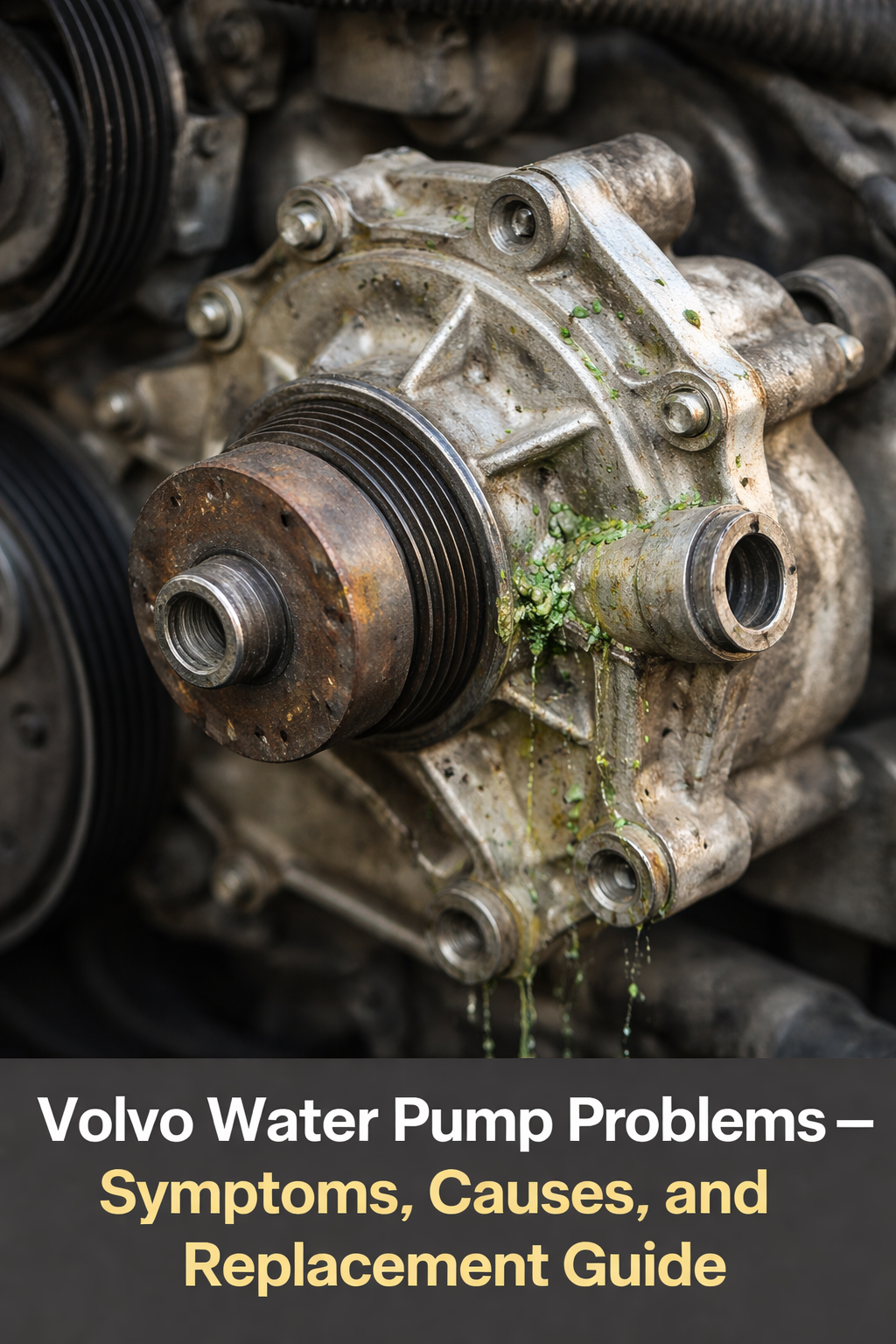
Volvo Water Pump Problems – Symptoms, Causes, and Replacement Guide
Introduction—Why the Water Pump Is Critical in Volvo Engines
The water pump is one of the most important yet often overlooked components in Volvo heavy-duty diesel engines. In engines such as the Volvo D12, D13, and D16, the water pump is responsible for circulating coolant through the engine block, cylinder head, radiator, EGR cooler, and oil cooler. Without proper coolant circulation, engine temperatures rise rapidly, leading to overheating, warped components, and even complete engine failure.
Volvo water pump problems are a leading root cause behind overheating events, head gasket failures, oil cooler damage, and EGR cooler cracks. Unfortunately, water pump failures often start subtly and are ignored until major damage has already occurred.
This guide explains Volvo water pump problems in detail, including symptoms, causes, diagnostics, repair options, replacement costs, and preventive maintenance strategies to protect your engine and avoid costly downtime.
What Does the Volvo Water Pump Do?
The water pump creates continuous coolant flow throughout the engine cooling system. Its primary functions include:
-
Circulating coolant through the engine block and cylinder head
-
Maintaining stable operating temperature under load
-
Supporting oil cooler and EGR cooler heat transfer
-
Preventing localized hot spots that cause cracking or warping
-
Ensuring proper heater and radiator performance
When the water pump fails, coolant flow is disrupted, and Volvo engine overheating can occur within minutes under load.
Common Causes of Volvo Water Pump Problems
Volvo water pumps operate in high-heat, high-pressure environments and eventually wear out. The most common causes of failure include:
1. Bearing Wear and Shaft Play
-
Over time, internal bearings wear out
-
Causes wobble, seal failure, and coolant leaks
2. Coolant Seal Failure
-
The internal seal separates coolant from the bearing
-
When it fails, coolant leaks through the weep hole
3. Corrosion and Coolant Contamination
-
Incorrect or old coolant corrodes internal pump surfaces
-
Scale buildup restricts coolant flow
4. Cavitation Damage
-
Air pockets in the cooling system cause metal erosion
-
Common in poorly maintained coolant systems
5. High Mileage and Heat Cycles
-
Most Volvo water pumps last 400,000–600,000 miles
-
Heat cycling weakens seals and impellers
6. Overheating Events
-
Previous overheating episodes accelerate pump failure
-
Warps internal components and destroys seals
Symptoms of Volvo Water Pump Failure
Early detection is critical. Common Volvo water pump problems show the following symptoms:
-
Coolant Leaks at Front of Engine
-
Overheating Under Load or at Idle
-
Low Coolant Levels with No External Hose Leak
-
Grinding or Whining Noise from Front Cover
-
Steam or Coolant Smell Near Radiator Area
-
Inconsistent Heater Performance
-
Repeated Overheating After Coolant Top-Off
Ignoring these symptoms can lead to head gasket failure, oil cooler damage, and EGR cooler cracking.
Troubleshooting Table – Volvo Water Pump Problems
| Symptom | Likely Cause | Recommended Fix |
|---|---|---|
| Coolant dripping from front | Seal failure | Replace water pump |
| Overheating at highway speed | Impeller damage | Replace water pump |
| Grinding noise | Bearing failure | Replace water pump |
| Coolant loss with no hose leak | Internal seal leak | Pressure test & replace |
| Repeated overheating | Poor circulation | Replace pump and flush system |
Diagnosing Volvo Water Pump Issues—Step-by-Step
1. Visual Inspection
-
Look for coolant residue around pump housing
-
Check for weep hole leakage
2. Cooling System Pressure Test
-
Pressurize system to detect slow leaks
-
Pump seal leaks often appear only under pressure
3. Listen for Bearing Noise
-
Use mechanic’s stethoscope near front cover
4. Temperature Differential Check
-
Infrared thermometer on hoses and radiator
-
Uneven temps indicate poor circulation
5. Check for Coolant Contamination
-
Rust, sludge, or oil traces suggest internal failure
How Volvo Water Pump Failure Causes Major Engine Damage
A failing water pump doesn’t just cause overheating—it triggers a chain reaction:
-
Overheating → Head gasket failure
-
Poor circulation → Oil cooler overheating
-
Coolant restriction → EGR cooler cracking
-
Heat spikes → Turbocharger stress
This is why water pump replacement is often recommended preventively during major cooling system service.
Repair and Replacement Options
Can a Volvo Water Pump Be Repaired?
No. Water pumps are not serviceable. Once seals or bearings fail, replacement is the only safe solution.
Water Pump Replacement Best Practices
-
Always use OEM or OEM-equivalent water pumps
-
Replace thermostat at the same time
-
Flush cooling system thoroughly
-
Replace contaminated coolant hoses if needed
Volvo Water Pump Replacement Cost
-
Water pump: $350–$800
-
Labor: $800–$1,500
-
Total average cost: $1,200–$2,300
Replacing a water pump early is far cheaper than repairing an overheated engine.
Preventing Volvo Water Pump Problems
Preventive maintenance dramatically extends water pump life:
-
Use Volvo-approved coolant only
-
Flush coolant every 2 years or OEM interval
-
Eliminate air pockets during refills
-
Replace water pump during major cooling service
-
Monitor temperature gauges closely
-
Never ignore minor coolant leaks
Real-World Case Study – Volvo D13 Water Pump Failure
A fleet operating Volvo VNL trucks with D13 engines reported intermittent overheating during long pulls.
Diagnosis:
-
Coolant seepage at water pump weep hole
-
Bearing noise under load
Repair:
-
Water pump replacement
-
Thermostat replacement
-
Full coolant flush
Result:
-
Overheating eliminated
-
MPG stabilized
-
Prevented head gasket failure across fleet
FAQs
Visual inspection, pressure testing, and temperature checks.
What are the symptoms of Volvo water pump failure?
Can a bad water pump cause overheating in Volvo trucks?
How long does a Volvo water pump last?
How much does Volvo water pump replacement cost?
Can I drive with a leaking water pump?
Does water pump failure cause head gasket damage?
Should the thermostat be replaced with the water pump?
Can bad coolant damage the water pump?
Is OEM better than aftermarket water pumps?
How do I test a Volvo water pump?
Internal Links
-
Volvo Engine Overheating—Causes, Diagnosis, and Fixes
-
Volvo Head Gasket Failure—Symptoms & Repair
-
Volvo Oil Cooler Problems—Causes & Solutions
-
Volvo EGR Cooler Problems—Causes & Fixes
-
Volvo D12 vs. D13—Engine Comparison
(Only linking to previously generated content as instructed.)
Conclusion – Protecting Your Volvo Engine from Water Pump Failure
Volvo water pump problems are one of the most preventable causes of catastrophic engine damage. When detected early and replaced properly, a failing water pump is a manageable repair. When ignored, it can destroy head gaskets, oil coolers, EGR coolers, and even entire engines.
For fleets and owner-operators alike, coolant maintenance and proactive water pump replacement are among the best investments you can make to extend engine life, reduce downtime, and protect profitability.
