
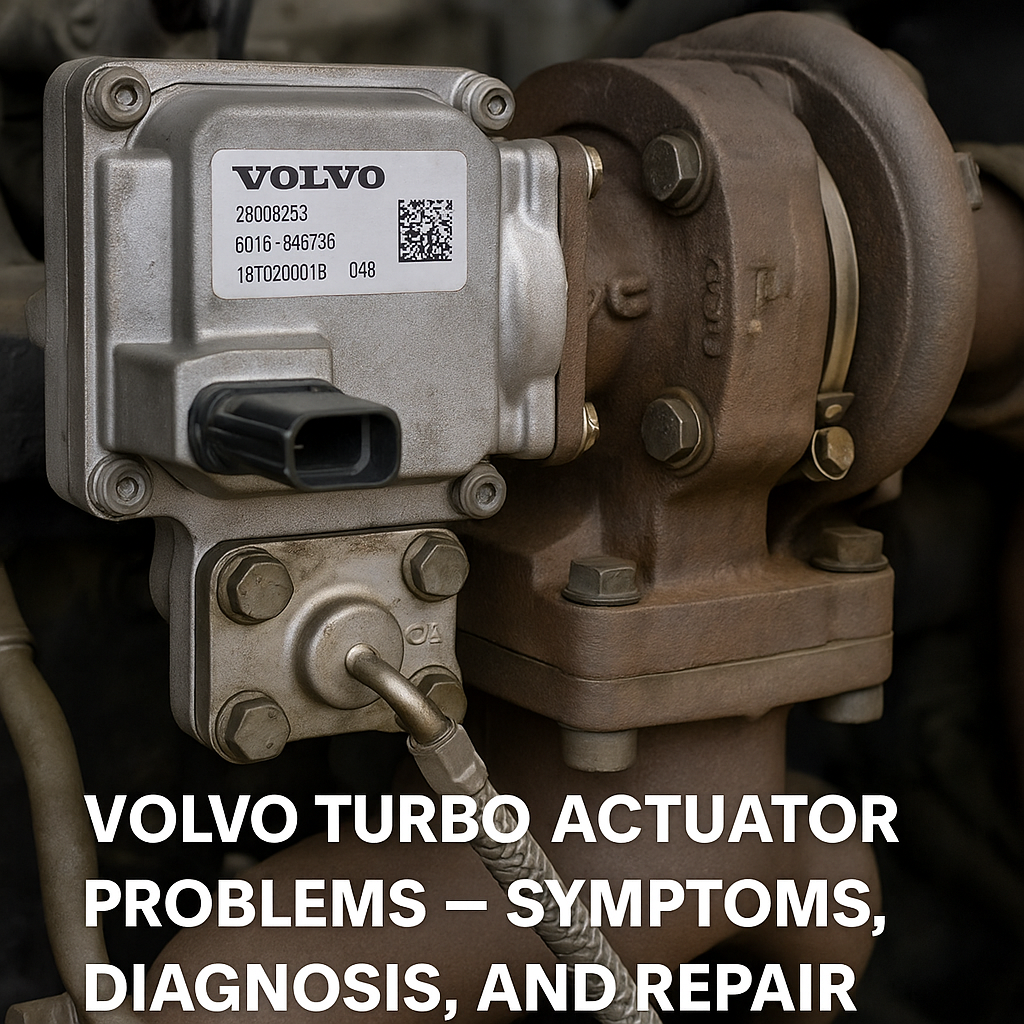
Volvo Turbo Actuator Problems – Symptoms, Diagnosis, and Repair Solutions
Introduction – Why the Turbo Actuator Matters in Volvo Trucks
In modern Volvo heavy-duty engines like the D12, D13, and D16, the turbocharger is no longer a simple fixed-geometry device. Most models now use a Variable Geometry Turbocharger (VGT) controlled by an electronic turbo actuator. The actuator adjusts the vanes inside the turbocharger to optimize boost pressure for performance, emissions, and fuel economy.
When the Volvo turbo actuator fails, it can cause serious drivability problems: loss of power, poor fuel efficiency, frequent regeneration issues, and even engine derates. Among Volvo owners, turbo actuator issues are becoming one of the most common (and costly) repairs.
This guide explains everything you need to know about Volvo turbo actuator problems—including their causes, symptoms, diagnostic steps, and repair solutions—so you can keep your truck running at peak performance.
What is a Turbo Actuator and How Does It Work?
The turbo actuator is an electronic or pneumatic device that controls the movement of vanes inside a variable geometry turbocharger. In Volvo trucks:
-
The actuator receives signals from the ECM (Engine Control Module).
-
It adjusts the vanes to regulate exhaust flow and boost pressure.
-
This allows better fuel economy at low speeds and more power under heavy load.
If the actuator fails, the turbo vanes stick in one position, leading to poor engine performance, higher exhaust temperatures, and potential damage to the emissions system.
Common Causes of Volvo Turbo Actuator Problems
-
Electronic Motor Failure – The actuator’s motor burns out due to heat stress.
-
Gear Wear or Breakage – Internal plastic gears wear down and cause misalignment.
-
Sticking VGT Vanes – Carbon buildup inside the turbo prevents smooth movement.
-
Wiring or Connector Issues – Corrosion or loose connections interrupt signals.
-
Faulty ECM Signals – Rare, but incorrect commands from the ECM can mimic actuator problems.
-
Overheating – Prolonged high EGTs (exhaust gas temperatures) shorten actuator life.
Symptoms of Volvo Turbo Actuator Failure
Spotting symptoms early helps avoid expensive repairs:
-
Loss of Power Under Load – Turbo cannot adjust to demand.
-
Excessive Black Smoke – Poor air-fuel ratio due to limited boost.
-
Frequent DPF Regenerations – Inefficient combustion creates extra soot.
-
Check Engine Light (CEL) – Codes like MID 128 SID 146 FMI 7 indicate turbo actuator fault.
-
High Exhaust Temperatures – Stuck vanes restrict airflow.
-
Erratic Boost Pressure Readings – Fluctuations in boost sensor data.
-
Poor Fuel Economy – Engine burns more fuel to compensate for low boost.
Troubleshooting Volvo Turbo Actuator Problems
| Symptom | Likely Cause | Recommended Fix |
|---|---|---|
| Low power + CEL | Burned-out actuator motor | Replace actuator |
| Excessive black smoke | VGT vanes stuck | Clean turbo or replace actuator |
| DPF regenerating too often | Boost control failure | Diagnose actuator signals |
| No communication with actuator | Wiring/connector issue | Repair harness |
| Boost pressure erratic | Worn gears inside actuator | Replace actuator |
Diagnosing Volvo Turbo Actuator Issues – Step-by-Step
-
Read Fault Codes – Using Volvo PTT or JPRO, check for actuator communication errors.
-
Visual Inspection – Look for corroded connectors, damaged wiring, or oil contamination.
-
Actuator Movement Test – Command the actuator via PTT to check vane movement.
-
Boost Pressure Test – Compare actual vs. commanded boost readings.
-
Physical Check of Turbo Vanes – Ensure carbon buildup isn’t preventing movement.
Repair and Replacement Options
-
Actuator Recalibration – Sometimes the actuator only needs reprogramming.
-
Cleaning and Resetting – If vanes are sticking, cleaning may resolve the issue.
-
Actuator Replacement – If gears, motor, or electronics are damaged, replacement is necessary.
-
Turbocharger Replacement – In cases of severe vane damage, the entire turbo must be replaced.
Cost of Volvo Turbo Actuator Replacement
-
Actuator part: $800–$1,500
-
Labor: $400–$800
-
Full turbocharger replacement: $2,500–$4,500
Preventing Volvo Turbo Actuator Problems
-
Perform regular DPF and EGR maintenance to reduce soot buildup.
-
Avoid excessive idling to limit carbon deposits.
-
Allow proper cool-down after heavy loads to reduce thermal stress.
-
Keep connectors and harnesses clean and sealed.
-
Perform periodic vane actuation tests during servicing.
Real-World Case Study – Volvo D13 Turbo Actuator Failure
A fleet running Volvo VNL trucks with D13 engines experienced frequent derates. Diagnostics showed turbo actuator faults (SID 146 FMI 7).
-
Cause: Carbon buildup caused vane sticking, burning out the actuator motor.
-
Fix: Replaced turbo actuator with updated OEM unit and cleaned turbo vanes.
-
Result: Restored full power, reduced regen frequency, and improved MPG by 0.3.
FAQs
What are the symptoms of Volvo turbo actuator problems?
Low power, CEL, black smoke.
How do you test a Volvo D13 turbo actuator?
Use Volvo PTT to command actuator movement.
How much does it cost to replace a Volvo turbo actuator?
$1,200–$2,300 including labor.
Can a bad turbo actuator cause DPF problems?
Yes, poor boost leads to soot buildup.
Can you drive with a bad turbo actuator?
You can, but expect reduced power and efficiency.
Do Volvo turbo actuators need programming?
Yes, after replacement they must be calibrated.
What causes Volvo D13 turbo actuator failure?
Overheating, carbon buildup, gear wear.
How long does a Volvo turbo actuator last?
Typically 300,000–500,000 miles.
Is it better to replace the turbo actuator or the whole turbo?
Replace the actuator unless vanes are damaged.
Can aftermarket actuators be used on Volvo trucks?
Yes, but OEM units are more reliable.
Conclusion – Protecting Your Volvo Turbo Actuator
The turbo actuator is a small but vital part of Volvo’s emissions and performance strategy. When it fails, the results can be costly in terms of downtime, fuel efficiency, and engine wear.
By recognizing symptoms early, performing accurate diagnostics, and investing in OEM-quality replacements, fleets and owner-operators can avoid unnecessary breakdowns. Preventative care—such as regular servicing, cleaning, and calibration—remains the best way to extend turbo actuator life and keep your Volvo truck on the road.
Volvo EGR Cooler Problems – Causes, Symptoms, and Fixes
Volvo Injector Problems – Symptoms, Causes, and Repair Solutions
Volvo Engine Overheating Issues – Causes, Diagnosis, and Fixes
Volvo Truck Turbocharger Failure – Symptoms, Causes, Repairs, and Prevention
