
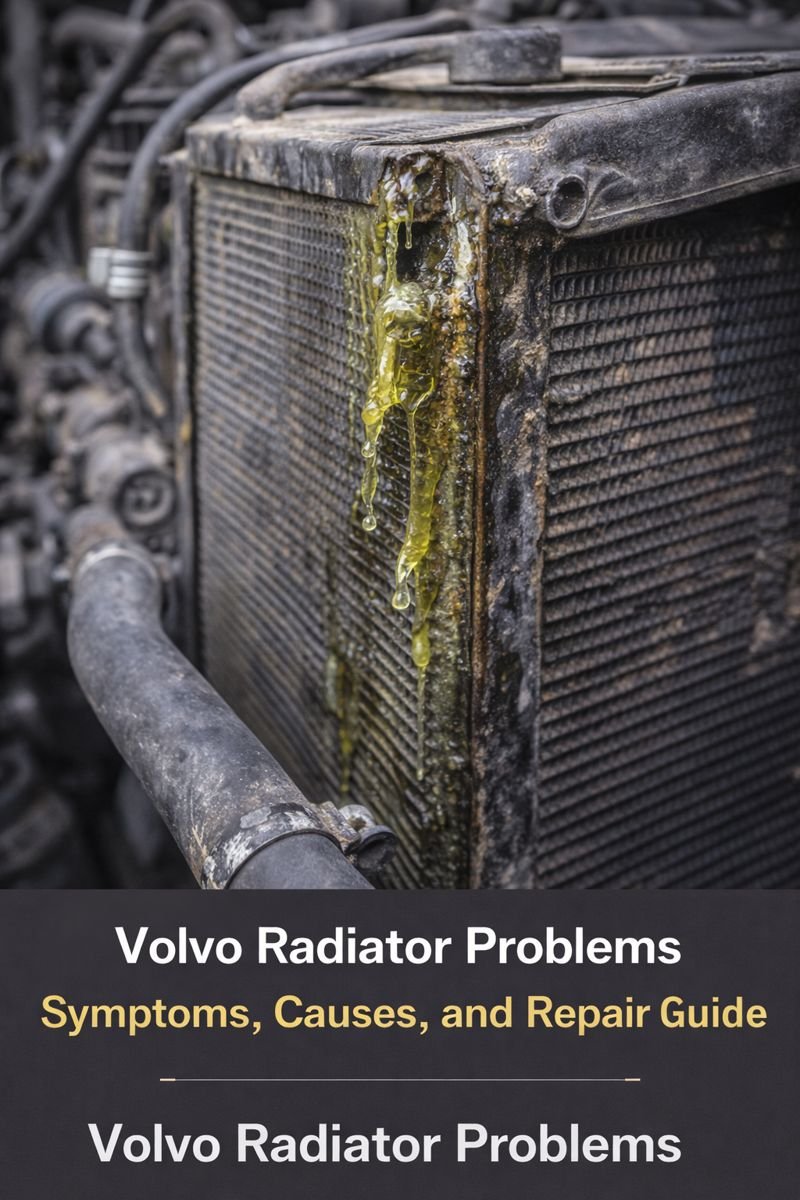
Volvo Radiator Problems – Symptoms, Causes, and Repair Guide
Introduction—Why the Radiator Is Critical in Volvo Trucks
The radiator is the heart of the cooling system in Volvo heavy-duty diesel engines. In engines such as the Volvo D12, D13, and D16, the radiator is responsible for dissipating heat absorbed by the coolant as it circulates through the engine block, cylinder head, oil cooler, and EGR cooler.
When Volvo radiator problems occur, excess heat cannot escape the cooling system. This leads to engine overheating, coolant loss, pressure buildup, and eventually catastrophic damage such as head gasket failure, oil cooler rupture, and coolant contamination.
Many Volvo owners replace water pumps or thermostats repeatedly without solving overheating issues—only to later discover the radiator was restricted or leaking. This guide explains Volvo radiator problems in detail, including symptoms, causes, diagnostics, repair options, costs, and prevention strategies.
What Does the Volvo Radiator Do?
The radiator performs several critical functions:
-
Transfers heat from coolant to outside air
-
Maintains stable engine operating temperature
-
Prevents overheating under load and idle
-
Supports oil cooler and EGR cooler heat rejection
-
Protects cylinder head, pistons, and turbocharger
If airflow or coolant flow through the radiator is restricted, engine temperature rises rapidly—even if all other cooling components are new.
Common Causes of Volvo Radiator Problems
1. Internal Coolant Restriction
-
Scale, rust, and debris restrict coolant passages
-
Often caused by poor coolant maintenance or contamination
-
Reduces heat transfer efficiency
2. External Fin Clogging
-
Dirt, bugs, road debris, oil mist, and soot clog fins
-
Reduces airflow through radiator core
-
Common on highway and vocational trucks
3. Radiator Leaks
-
Cracked plastic tanks
-
Corroded aluminum cores
-
Failed seams and hose connections
4. Coolant Contamination
-
Oil in coolant coats radiator tubes
-
Sludge insulates heat exchange surfaces
-
Often caused by oil cooler or head gasket failure
5. Age and Heat Cycling
-
Radiators weaken after hundreds of thousands of miles
-
Repeated pressure cycles cause micro-cracks
Symptoms of Volvo Radiator Failure
Recognizing radiator problems early prevents major engine damage.
Common Volvo Radiator Problem Symptoms
-
Engine overheating at highway speeds
-
Coolant loss with no visible hose leak
-
Sweet coolant smell from front of truck
-
Visible coolant residue on radiator core
-
Temperature spikes under load
-
Fan running excessively
-
Overheating only during hot weather
Unlike thermostat or water pump issues, radiator failures often cause overheating at speed, not just at idle.
Troubleshooting Table – Volvo Radiator Problems
| Symptom | Likely Cause | Recommended Action |
|---|---|---|
| Overheating at highway speed | Restricted radiator | Clean or replace radiator |
| Coolant dripping from front | Radiator leak | Pressure test & replace |
| Repeated overheating | Clogged radiator core | Replace radiator |
| Fan running constantly | Poor heat rejection | Inspect airflow & radiator |
| Coolant loss, no hose leak | Tank or seam crack | Radiator replacement |
Diagnosing Volvo Radiator Issues—Step by Step
1. Visual Inspection
-
Inspect fins for debris or oil buildup
-
Look for wet spots or crusty residue
2. Cooling System Pressure Test
-
Pressurize system and inspect radiator seams
-
Small leaks often appear only under pressure
3. Temperature Differential Test
-
Use infrared thermometer
-
A large inlet/outlet temperature difference indicates restriction
4. Airflow Inspection
-
Check charge-air cooler and condenser blockage
-
Radiator airflow depends on upstream cleanliness
5. Coolant Condition Check
-
Oily or muddy coolant indicates contamination
-
Contaminated coolant reduces radiator efficiency
How Radiator Problems Cause Bigger Volvo Engine Failures
A failing radiator triggers a cascade of damage:
-
Overheating → Head gasket failure
-
High coolant temps → Oil cooler rupture
-
Heat soak → EGR cooler cracking
-
Elevated EGTs → Turbocharger stress
-
Coolant breakdown → Bearing damage
This is why radiator health is central to long-term Volvo engine reliability.
Radiator Repair vs Replacement
Can a Volvo Radiator Be Repaired?
-
Minor external leaks may be repaired temporarily
-
Internal restrictions cannot be repaired reliably
When Replacement Is Required
-
Internal clogging
-
Oil-contaminated cores
-
Cracked tanks or seams
-
Repeated overheating despite other repairs
Best Practices
-
Replace radiator after coolant contamination events
-
Clean CAC and condenser at the same time
-
Replace radiator hoses if aged or swollen
Volvo Radiator Replacement Cost
| Item | Estimated Cost |
|---|---|
| Radiator | $900–$2,000 |
| Labor | $800–$1,500 |
| Coolant & service | $200–$400 |
| Total | $1,900–$3,500 |
Replacing a radiator early is far cheaper than rebuilding an overheated engine.
Preventing Volvo Radiator Problems
-
Use Volvo-approved coolant only
-
Flush coolant every 2 years or OEM interval
-
Clean radiator fins regularly
-
Inspect for oil contamination immediately
-
Replace radiator after oil cooler failure
-
Avoid ignoring minor overheating events
Preventive radiator maintenance saves thousands in engine repairs.
Real-World Case Study – Volvo D13 Radiator Failure
A fleet of Volvo VNL trucks experienced repeated overheating despite new thermostats and water pumps.
Diagnosis
-
Internal radiator restriction due to oil contamination
-
Reduced heat rejection at highway speeds
Repair
-
Radiator replacement
-
Cooling system flush
-
Oil cooler replacement
Result
-
Stable operating temperatures
-
Eliminated overheating complaints
-
Extended engine life across fleet
Frequently Asked Questions About Volvo Radiator Problems
What are the symptoms of a bad Volvo radiator?
Can a clogged radiator cause overheating at highway speeds?
How long does a Volvo radiator last?
How much does Volvo radiator replacement cost?
Can oil contamination ruin a radiator?
Should radiator be replaced after oil cooler failure?
Can I clean a clogged Volvo radiator?
Does radiator failure affect fuel economy?
Can radiator issues damage the turbocharger?
Is OEM radiator better than aftermarket?
Internal Links
(Only to previously generated content)
-
Volvo Engine Overheating—Causes & Fixes
-
Volvo Coolant Contamination Problems
-
Volvo Water Pump Problems – Replacement Guide
-
Volvo Thermostat Problems—Symptoms & Fixes
-
Volvo Oil Cooler Problems—Causes & Solutions
-
Volvo Head Gasket Failure – Repair Guide
-
Volvo D12 vs D13 – Engine Comparison
Conclusion—Why Volvo Radiator Maintenance Is Non-Negotiable
Volvo radiator problems are often misdiagnosed and underestimated. A restricted or leaking radiator can silently destroy an engine even when other components appear healthy.
By monitoring coolant condition, maintaining airflow, and replacing radiators proactively—especially after contamination events—Volvo owners can avoid catastrophic failures and keep their trucks reliable for hundreds of thousands of miles.
