
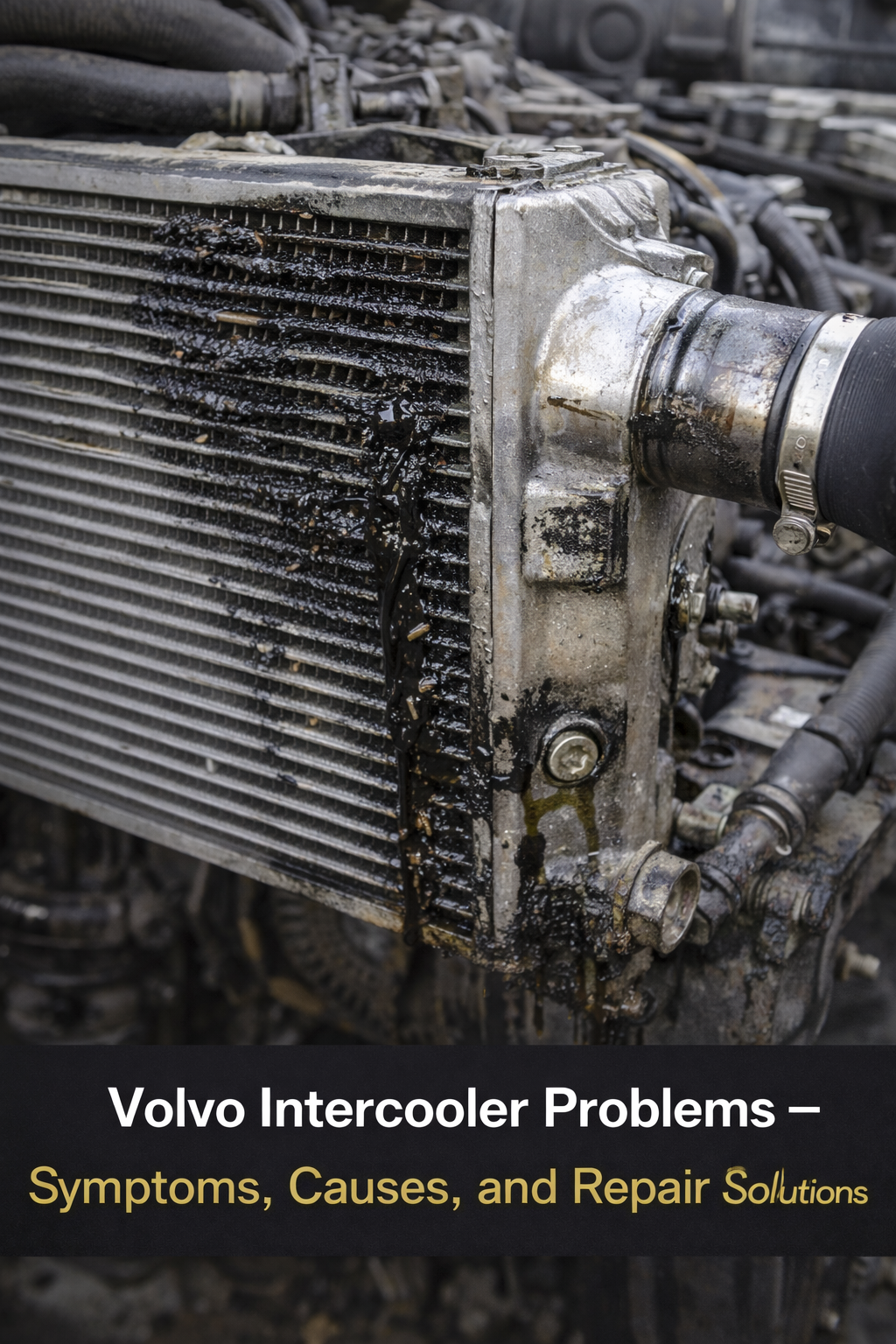
7 Volvo Intercooler Problems – Symptoms, Causes, and Repair Solutions
Introduction—Why the Intercooler Is Critical in Volvo Engines
The intercooler, also known as the charge air cooler, plays a crucial role in Volvo heavy-duty diesel engines such as the D12, D13, and D16. Its primary function is to cool compressed air coming from the turbocharger before it enters the intake manifold. Cooler air is denser, allowing better combustion, improved fuel efficiency, and lower exhaust gas temperatures.
When Volvo intercooler problems occur, intake air temperatures rise, boost pressure drops, and the engine compensates by injecting more fuel. This leads to power loss, excessive black smoke, poor fuel economy, increased DPF regeneration, and turbocharger stress.
Many intercooler failures go undetected because the truck may still run—but inefficiently. This guide explains Volvo intercooler problems in detail, including symptoms, causes, diagnostics, repair options, costs, and prevention strategies.
What Does the Volvo Intercooler Do?
The intercooler performs several critical functions:
-
Lowers compressed air temperature from the turbo
-
Increases air density for efficient combustion
-
Reduces exhaust gas temperature (EGT)
-
Protects pistons, valves, and turbocharger
-
Improves fuel economy and engine longevity
Without a properly functioning intercooler, even a healthy turbocharger cannot perform correctly.
7 Common Volvo Intercooler Problems
1. Intercooler Boost Leaks
-
Cracked end tanks or core leaks
-
Causes loss of boost pressure
-
Most common intercooler failure on Volvo trucks
2. Oil Contamination Inside the Intercooler
-
Turbo seal wear allows oil into charge air system
-
Oil coats intercooler fins, reducing cooling efficiency
3. External Fin Blockage
-
Dirt, bugs, oil mist, and road debris block airflow
-
Causes high intake air temperatures
4. Internal Core Restriction
-
Oil sludge buildup inside tubes
-
Restricts airflow and reduces cooling
5. Hose and Clamp Failures
-
Loose, cracked, or swollen charge air hoses
-
Often misdiagnosed as turbo failure
6. Poor Heat Transfer
-
An aging intercooler loses thermal efficiency
-
Common on high-mileage D13 engines
7. Physical Damage
-
Road debris or vibration causes cracks
-
Especially common on highway trucks
Symptoms of Volvo Intercooler Failure
Recognizing symptoms early prevents turbo and engine damage.
Common Volvo Intercooler Problem Symptoms
-
Loss of engine power
-
Excessive black smoke
-
Poor fuel economy
-
Whistling or hissing sound under boost
-
Frequent DPF regenerations
-
High intake air temperature readings
-
Turbo over-speed conditions
Unlike cooling system failures, intercooler problems mainly affect performance and efficiency rather than coolant temperature.
Troubleshooting Table – Volvo Intercooler Problems
| Symptom | Likely Cause | Recommended Action |
|---|---|---|
| Power loss | Boost leak | Pressure test intercooler |
| Black smoke | Poor air density | Inspect intercooler & hoses |
| Hissing noise | Hose or core leak | Replace damaged parts |
| Poor MPG | Heat transfer loss | Clean or replace the intercooler. |
| High IAT readings | Restricted airflow | Inspect fins & core |
How to Diagnose Volvo Intercooler Issues
1. Visual Inspection
-
Check for oil residue on intercooler and hoses
-
Inspect fins for blockage or damage
2. Boost Pressure Test
-
Pressurize charge air system
-
Listen for leaks at intercooler core or end tanks
3. Intake Air Temperature Monitoring
-
Compare IAT before and after intercooler
-
High temps indicate poor cooling efficiency
4. Hose and Clamp Inspection
-
Replace aged hoses proactively
-
Ensure proper clamp torque
How Intercooler Problems Cause Bigger Engine Failures
Unresolved intercooler issues lead to:
-
Turbocharger over-speed
-
Excessive EGTs
-
DPF clogging
-
Injector stress
-
Piston and valve damage
-
Reduced engine life
Intercooler efficiency directly affects combustion quality and emissions health.
Volvo Intercooler Repair vs Replacement
Can an Intercooler Be Repaired?
-
Minor external leaks may be temporarily repaired
-
Internal contamination or core damage requires replacement
When Replacement Is Required
-
Oil-soaked cores
-
Internal restrictions
-
Repeated boost leaks
-
Physical damage
Best Practices
-
Clean charge air system during replacement
-
Inspect turbo seals
-
Replace hoses and clamps if aged
Volvo Intercooler Replacement Cost
| Item | Estimated Cost |
|---|---|
| Intercooler | $900–$2,200 |
| Labor | $700–$1,500 |
| Hoses & clamps | $150 – $400 |
| Total | $1,800–$3,800 |
Replacing a failing intercooler is far cheaper than repairing turbo or engine damage.
Preventing Volvo Intercooler Problems
-
Inspect charge air hoses at every service
-
Clean intercooler fins regularly
-
Address turbo oil leaks immediately
-
Monitor intake air temperature data
-
Replace intercooler after major turbo failure
Preventive maintenance significantly improves engine efficiency and longevity.
Real-World Case Study—Volvo D13 Intercooler Failure
A Volvo VNL with a D13 engine experienced power loss and excessive black smoke.
Diagnosis
-
Boost leak in intercooler end tank
-
Elevated intake air temperatures
Repair
-
Intercooler replacement
-
Hose and clamp service
Result
-
Restored power
-
Reduced smoke
-
Improved fuel economy
Frequently Asked Questions About Volvo Intercooler Problems
What are the symptoms of a bad Volvo intercooler?
Can an intercooler leak cause power loss?
How do I test a Volvo intercooler for leaks?
Can oil inside the intercooler damage the engine?
How long does a Volvo intercooler last?
Does intercooler failure affect turbocharger life?
Yes, intercooler failure can cause turbo overspeed and significantly shorten turbocharger life.
Can a clogged intercooler cause black smoke?
Yes, a clogged intercooler restricts airflow and causes incomplete combustion, resulting in black smoke.
How much does a Volvo intercooler replacement cost?
Volvo intercooler replacement usually costs between $1,800 and $3,800, including parts and labor.
Should hoses be replaced with the intercooler?
Yes, replacing hoses with the intercooler prevents future boost leaks and repeat failures.
Is the OEM intercooler better than aftermarket?
Internal Links
(Only to previously generated content)
-
Volvo Turbocharger Failure—Symptoms & Fixes
-
Volvo Turbo Actuator Problems – Diagnosis & Repair
-
Volvo Fan Clutch Problems—Symptoms & Repair
-
Volvo Radiator Problems—Symptoms & Repair
-
Volvo Engine Overheating—Causes & Fixes
-
Volvo D12 vs. D13—Engine Comparison
Conclusion—Why Volvo Intercooler Health Matters
Volvo intercooler problems are often overlooked, yet they directly affect engine performance, fuel economy, and emissions health. A leaking or restricted intercooler forces the engine to work harder, accelerating wear and increasing operating costs.
By diagnosing intercooler issues early, maintaining clean airflow, and replacing damaged components promptly, Volvo owners can protect turbochargers, reduce downtime, and extend engine life.
