
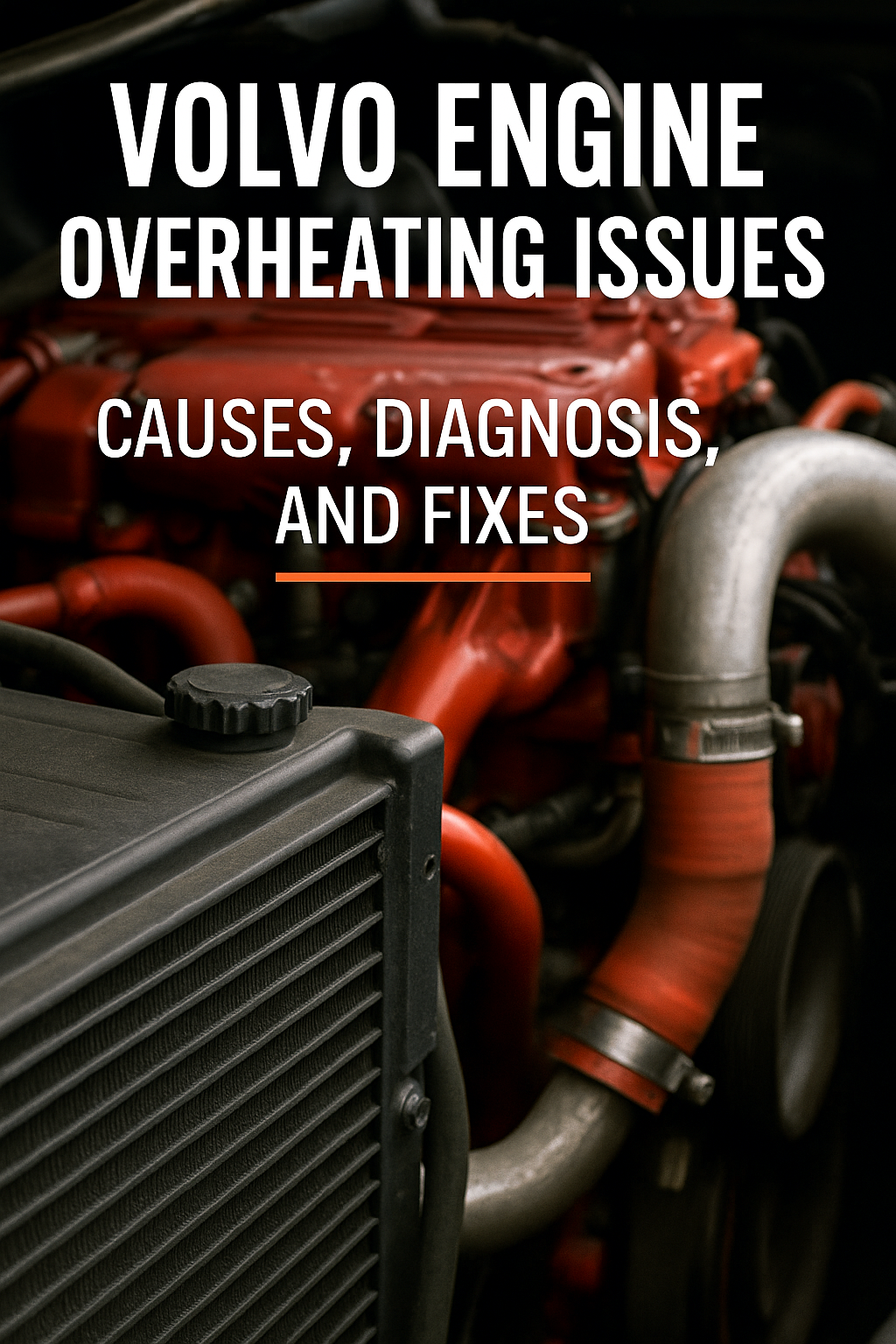
Volvo Engine Overheating Issues – Causes, Diagnosis, and Fixes
Introduction – Why Volvo Engine Overheating Demands Urgent Attention
When it comes to heavy-duty Volvo trucks, engine reliability is non-negotiable. One of the most serious threats to that reliability is Volvo engine overheating. Overheating not only causes immediate performance issues but can also lead to catastrophic engine failure if ignored. The cost of neglect can range from expensive component replacements to complete engine rebuilds.
This comprehensive guide will help Volvo truck owners, fleet managers, and diesel mechanics understand the root causes of overheating, recognize early symptoms, diagnose issues accurately, and implement effective repairs. Whether you’re driving a Volvo D12, D13, or D16, the principles in this guide will help you keep your engine running at optimal temperature.
Understanding the Volvo Engine Cooling System
The cooling system in Volvo heavy-duty engines is designed to manage high operating temperatures while under heavy loads and in extreme conditions. Key components include:
-
Radiator – Transfers heat from coolant to the air.
-
Water Pump – Circulates coolant throughout the engine.
-
Thermostat – Regulates coolant flow based on temperature.
-
EGR Cooler – Reduces exhaust gas temperatures before recirculation.
-
Oil Cooler – Maintains optimal oil temperature to prevent viscosity breakdown.
-
Cooling Fan & Clutch – Engages when temperatures rise beyond safe limits.
Any fault in these components can contribute to Volvo truck overheating problems.
Common Causes of Volvo Engine Overheating
-
Low Coolant Levels or Leaks
Coolant loss, even in small amounts, can rapidly escalate into overheating issues. Common leak points include radiator hoses, water pump seals, and EGR coolers. -
Faulty Water Pump
A failing water pump can’t circulate coolant effectively, leading to localized hotspots and eventual overheating. -
Thermostat Stuck Closed
If the thermostat remains closed, coolant will be trapped in the engine block, causing rapid temperature spikes. -
EGR Cooler Failure
A damaged EGR cooler can introduce exhaust gases into the coolant system, leading to bubbling, contamination, and overheating. -
Radiator Clogging or Damage
Dirt, debris, and scale buildup inside the radiator can drastically reduce cooling efficiency. -
Cooling Fan or Clutch Failure
Without proper airflow, heat exchange is compromised, especially in stop-and-go traffic or uphill climbs. -
Oil Cooler Malfunction
Hot oil increases engine friction, adding thermal stress to the system.
Symptoms of Volvo Engine Overheating
-
Temperature Gauge Spikes – The most obvious sign, often accompanied by a warning light.
-
Coolant Loss Without Visible Leaks – Could indicate internal leakage from a blown head gasket or cracked cylinder head.
-
White Smoke from Exhaust – A sign coolant is entering the combustion chamber.
-
Loss of Cabin Heater Function – Air pockets in the coolant system reduce heat transfer.
-
Reduced Engine Power – The ECM may derate power to prevent further damage.
Troubleshooting Table – Volvo Engine Overheating Causes & Fixes
| Symptom | Possible Cause | Recommended Fix |
|---|---|---|
| Temp gauge rising quickly | Low coolant | Top up & check for leaks |
| White exhaust smoke | EGR cooler failure | Replace EGR cooler |
| Coolant overflow tank bubbling | Head gasket failure | Pressure test & replace gasket |
| Reduced power + high temp | Radiator clog | Flush or replace radiator |
| Heater not working | Airlock in coolant system | Bleed cooling system |
Diagnosing Volvo Engine Overheating – Step-by-Step
-
Visual Inspection – Check hoses, clamps, and radiator for leaks or damage.
-
Cooling System Pressure Test – Identifies leaks and weak points.
-
Thermostat Function Test – Remove and check operation in boiling water.
-
Water Pump Flow Test – Ensures circulation is within spec.
-
Radiator Cap Inspection – Faulty caps can cause pressure loss.
-
ECU Fault Code Scan – Codes related to coolant temperature sensors or fan control.
Common Turbo-Related Overheating Links
In some cases, overheating may be linked to Volvo truck turbocharger failure. A faulty turbo can create excess exhaust gas temperatures, putting strain on the cooling system. You can learn more in our detailed Volvo truck turbocharger failure guide.
Fixing Volvo Engine Overheating Problems
-
Coolant Flush & Refill – Removes scale and contaminants.
-
Radiator Replacement – Restores proper cooling capacity.
-
Water Pump Replacement – Ensures efficient coolant circulation.
-
Thermostat Replacement – Prevents coolant flow restriction.
-
EGR Cooler Repair/Replacement – Stops coolant contamination.
Preventing Volvo Engine Overheating
-
Follow OEM Maintenance Schedules – Replace coolant at specified intervals.
-
Use Volvo-Approved Coolant – Prevents corrosion and scaling.
-
Inspect Hoses & Clamps Regularly – Catch leaks early.
-
Clean Radiator & CAC Fins – Prevent airflow blockages.
-
Monitor Fan Operation – Ensure the clutch engages properly.
Real-World Example – Volvo D13 Overheating Case Study
A fleet of Volvo VNL trucks experienced repeated Volvo D13 overheating events due to debris blocking the radiator fins. The fix involved:
-
High-pressure cleaning of radiator and CAC
-
Installation of debris screens
-
Revised maintenance schedule to include quarterly radiator cleaning
Result: 90% reduction in overheating incidents and improved MPG by 0.2.
FAQs
What causes Volvo engine overheating?
Common causes include coolant leaks, clogged radiators, faulty water pumps, and EGR cooler failures.
Can I drive with an overheating Volvo engine?
No, it risks engine damage
What are the symptoms of Volvo truck overheating problems?
Temperature spikes, coolant loss, white smoke, reduced power.
How to fix Volvo D13 overheating issues?
Diagnose leaks, replace faulty components, flush the cooling system.
Does Volvo D12 have overheating problems?
Yes, especially with clogged radiators or water pump wear.
How much does it cost to fix Volvo engine overheating?
$500–$4,000 depending on the cause.
Can turbo problems cause overheating?
Yes, excessive exhaust temperatures can overload the cooling system.
What coolant should I use for my Volvo truck?
Volvo-approved heavy-duty coolant only.
How often should I flush my Volvo engine coolant?
Every 2 years or per OEM specs.
What is the most common overheating fix?
Radiator cleaning or replacement.
Conclusion – Keeping Your Volvo Engine Cool
Preventing Volvo engine overheating requires proactive maintenance, quality parts, and awareness of early warning signs. A well-maintained cooling system not only prevents costly downtime but also extends engine life and fuel efficiency. Whether you’re managing a single truck or an entire fleet, consistent cooling system care pays off in reliability and performance.
Contact Information
📧 Email: info@volvokits.com
📞 Phone: 786-814-1410
🌐 Website: https://www.volvokits.com
