
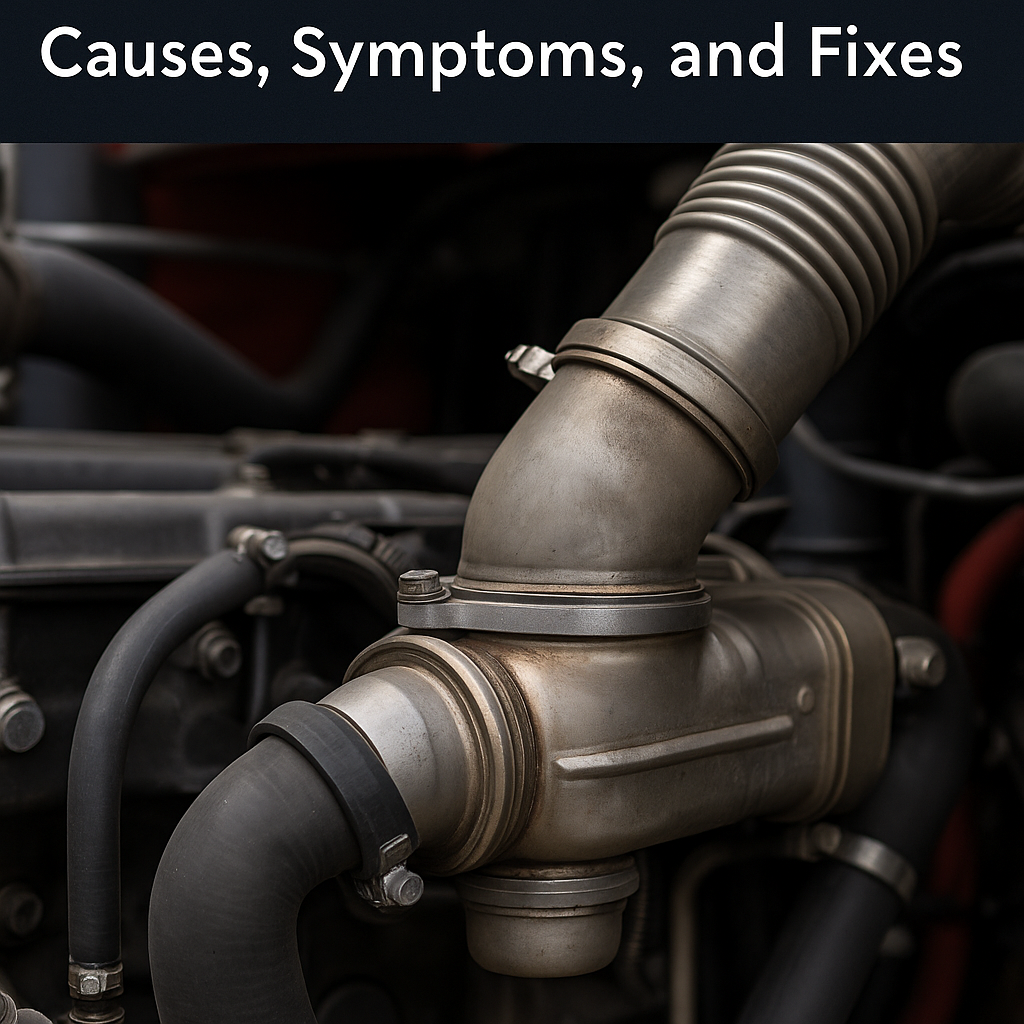
Volvo EGR Cooler Problems – Causes, Symptoms, and Fixes
Introduction – Why the EGR Cooler Matters in Volvo Trucks
The Exhaust Gas Recirculation (EGR) cooler is one of the most critical emissions control components in Volvo heavy-duty engines like the D12, D13, and D16. Its job is to lower the temperature of exhaust gases before reintroducing them into the intake system. By cooling and recirculating exhaust, the EGR system reduces nitrogen oxide (NOx) emissions and keeps Volvo trucks compliant with EPA standards.
But when the EGR cooler fails, it can lead to serious engine problems: coolant leaks, overheating, loss of power, white smoke, and even catastrophic engine damage. Among Volvo owners, EGR cooler failure is one of the most frequent causes of downtime and expensive repairs.
This guide provides a complete breakdown of EGR cooler issues—their causes, symptoms, diagnostic methods, and repair solutions. Whether you operate a single Volvo semi-truck or manage a fleet, understanding EGR cooler health is essential to long-term reliability.
Common Causes of Volvo EGR Cooler Problems
The EGR cooler is constantly exposed to high exhaust temperatures, soot buildup, and coolant flow. Over time, these stressors cause failure. The main causes include:
-
Excessive Carbon and Soot Buildup
-
Carbon deposits clog coolant passages and reduce cooling efficiency.
-
Leads to overheating and eventual cracking of the cooler core.
-
-
Coolant Contamination
-
Poor-quality or degraded coolant accelerates internal corrosion.
-
Lack of proper maintenance causes scale deposits inside the cooler.
-
-
Thermal Stress and Cracking
-
Repeated heating and cooling cycles weaken the metal core.
-
Small cracks eventually expand, causing coolant-to-exhaust leaks.
-
-
Poor Maintenance and Extended Service Intervals
-
Delaying coolant flushes or ignoring early warning signs causes premature failure.
-
-
EGR Valve Malfunctions
-
A sticking or failed EGR valve increases exhaust flow, putting extra strain on the cooler.
-
Symptoms of Volvo EGR Cooler Failure
Recognizing the symptoms early can prevent expensive engine damage. Watch for these signs:
-
White Exhaust Smoke – Coolant leaking into exhaust creates thick white smoke.
-
Coolant Loss Without Visible Leak – Internal cooler leaks push coolant into the intake system.
-
Engine Overheating – Restricted or clogged EGR cooler prevents proper cooling.
-
Check Engine Light (CEL) – Codes related to EGR temperature or flow imbalance.
-
Reduced Power & Poor Fuel Economy – Inefficient combustion due to improper exhaust recirculation.
-
Strong Exhaust Odor – A cracked cooler may cause unfiltered exhaust gases to enter the intake.
-
Contaminated Coolant – Exhaust gases entering coolant cause bubbling and discoloration.
Troubleshooting Volvo EGR Cooler Problems
Diagnosing Volvo EGR Cooler Issues – Step-by-Step
-
Visual Inspection
-
Check coolant reservoir for bubbling or soot traces.
-
Inspect exhaust for excessive white smoke.
-
-
Pressure Test
-
Pressurize the cooling system and monitor for drops caused by leaks.
-
-
Bypass Test
-
Temporarily bypass the EGR cooler to confirm coolant leak source.
-
-
Exhaust Gas Temperature Monitoring
-
Compare pre- and post-EGR cooler temps to detect restriction.
-
-
Code Reading with Volvo PTT
-
Scan for EGR flow imbalance or coolant temperature differential codes.
-
Repair and Replacement Options
Once diagnosed, the repair options vary:
-
Cleaning the EGR Cooler
-
Ultrasonic or chemical cleaning can remove carbon buildup if caught early.
-
-
EGR Cooler Replacement
-
The most reliable solution for cracked or leaking coolers.
-
OEM Volvo EGR coolers ensure proper fit and durability.
-
-
Updated Designs
-
Later Volvo D13 models feature improved EGR coolers designed to reduce clogging.
-
Cost of Volvo EGR Cooler Replacement
-
Average part cost: $900 – $1,500
-
Labor cost: $1,000 – $2,000 depending on truck model and shop rates
-
Total replacement: $2,000 – $3,500
While costly, replacing a failing cooler is far cheaper than repairing a damaged head gasket or replacing a full engine.
Preventing Volvo EGR Cooler Problems
Prevention saves money and downtime. Best practices include:
-
Use Proper Coolant & Change on Schedule
-
Follow Volvo OEM coolant specs. Avoid mixing formulas.
-
-
Regular Cleaning and Inspections
-
Clean EGR cooler passages during major service intervals.
-
-
Address EGR Valve Issues Quickly
-
A failing EGR valve accelerates cooler damage.
-
-
Avoid Extended Idling
-
Excess idling increases soot deposits inside the cooler.
-
-
Routine Oil Analysis
-
Detects coolant intrusion early, before major damage occurs.
-
Real-World Case Study – Volvo D13 EGR Cooler Failure
A 2018 Volvo VNL with a D13 engine showed excessive white smoke and unexplained coolant loss. Pressure tests confirmed an internal cooler crack.
-
Fix: Full EGR cooler replacement with updated OEM part.
-
Result: White smoke disappeared, coolant levels stabilized, and fuel economy improved by 0.5 MPG.
This highlights why quick action is crucial to preventing further engine damage.
FAQs
What are the symptoms of a bad Volvo EGR cooler?
White smoke, coolant loss, overheating.
Can a Volvo truck run with a bad EGR cooler?
It may run, but severe damage can result.
How much does it cost to replace a Volvo D13 EGR cooler?
Around $2,000–$3,500 total.
Can an EGR cooler be cleaned instead of replaced?
Yes, if buildup is minor.
Why does my Volvo truck blow white smoke?
Likely coolant leaking through the EGR cooler.
How long do Volvo EGR coolers last?
Typically 200,000–300,000 miles.
Does EGR cooler failure affect fuel economy?
Yes, poor combustion efficiency reduces MPG.
Can a bad EGR cooler cause overheating?
Yes, clogged passages restrict coolant flow.
Do Volvo EGR coolers need OEM replacement?
OEM is strongly recommended for durability.
Is EGR cooler replacement covered by warranty?
Sometimes, if under emissions warranty.
Conclusion – Protecting Your Volvo Engine from EGR Cooler Failures
EGR coolers are essential for emissions compliance and smooth engine performance. When they fail, the consequences can be devastating—coolant leaks, overheating, and even engine failure. The key is to spot early symptoms, diagnose quickly, and invest in quality repairs or replacements.
For fleets, preventative maintenance like regular coolant service, EGR valve inspections, and periodic cooler cleaning can reduce downtime and extend engine life. Investing in the health of your Volvo EGR cooler keeps your truck compliant, reliable, and profitable.
Contact Information
📧 Email: info@volvokits.com
📞 Phone: 786-814-1410
🌐 Website: https://www.volvokits.com
Volvo Injector Problems – Symptoms, Causes, and Repair Solutions
Volvo Engine Overheating Issues – Causes, Diagnosis, and Fixes
Volvo Truck Turbocharger Failure – Symptoms, Causes, Repairs, and Prevention
