
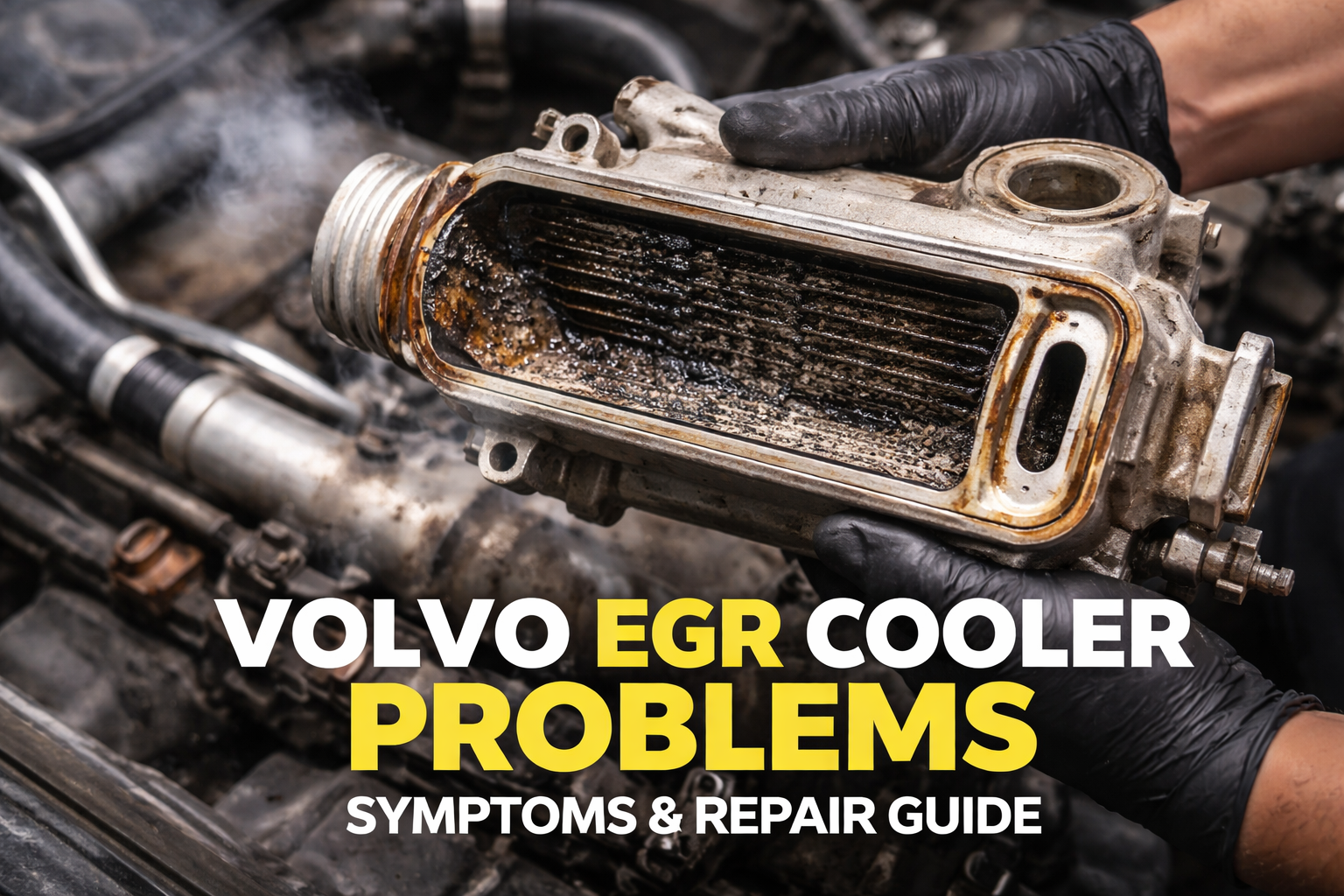
9 Volvo EGR Cooler Problems – Symptoms, Causes, and Repair Guide
Introduction—Why the EGR Cooler Is Critical in Volvo Diesel Engines
The Exhaust Gas Recirculation (EGR) system is one of the most important emissions components in modern Volvo diesel engines such as the D12, D13, and D16. At the heart of this system is the EGR cooler, which reduces exhaust gas temperature before the gases are reintroduced into the intake manifold.
When Volvo EGR cooler problems occur, the results can be severe: coolant loss, white smoke, overheating, coolant contamination, and even catastrophic engine damage.
EGR cooler failures are especially common in high-mileage Volvo D13 engines and are frequently misdiagnosed as head gasket or oil cooler issues.
This complete guide explains Volvo EGR cooler problems, including symptoms, causes, diagnostic methods, repair options, replacement cost, and prevention strategies.
What Does the Volvo EGR Cooler Do?
The Volvo EGR cooler:
-
Cools hot exhaust gases before recirculation
-
Reduces NOx emissions
-
Protects intake components from excessive heat
-
Helps maintain combustion efficiency
Without a functioning EGR cooler, exhaust temperatures can spike and cause damage to multiple engine systems.
9 Common Volvo EGR Cooler Problems
1. Internal Coolant Leaks
One of the most common Volvo EGR cooler problems is internal coolant leakage into the exhaust system.
This causes:
-
White smoke from exhaust
-
Coolant loss with no external leak
-
Rough engine operation
2. Coolant in Exhaust System
When coolant leaks into exhaust passages:
-
Steam exits the tailpipe
-
Sweet smell from exhaust
-
Possible DPF damage
3. Cracked EGR Cooler Core
Thermal stress causes internal cracking over time, especially in heavy-duty fleet use.
4. Oil and Coolant Contamination
In severe cases, EGR cooler failure contributes to coolant contamination, which can also impact oil coolers and head gaskets.
5. Overheating Under Load
A failing EGR cooler can disrupt heat balance in the engine, increasing overall coolant temperature.
6. Frequent DPF Regeneration
Improper exhaust cooling leads to:
-
Increased soot production
-
More frequent DPF regeneration cycles
7. White Exhaust Smoke
White smoke is a major indicator of coolant entering the exhaust stream.
8. Engine Derate Conditions
ECM may reduce power when excessive temperature or emissions imbalance is detected.
9. Complete EGR System Failure
If ignored, EGR cooler failure can lead to:
-
Turbocharger damage
-
Head gasket failure
-
Severe coolant contamination
Symptoms of Volvo EGR Cooler Problems
Common symptoms include:
-
Coolant loss without visible leak
-
White smoke from exhaust
-
Sweet coolant smell
-
Engine overheating
-
Rough idle
-
Check engine light
-
Frequent DPF regeneration
-
Poor fuel economy
How to Diagnose Volvo EGR Cooler Problems
1. Cooling System Pressure Test
Loss of pressure without a visible leak may indicate internal EGR cooler failure.
2. Exhaust Inspection
White vapor indicates coolant intrusion.
3. DPF Monitoring
Frequent regens may indicate improper exhaust gas cooling.
4. Coolant Analysis
Check for contamination or abnormal coolant breakdown.
How EGR Cooler Failure Causes Major Engine Damage
Ignoring Volvo EGR cooler problems can lead to:
-
Hydro-lock conditions
-
Turbocharger failure
-
Cylinder head damage
-
DPF destruction
-
Complete engine rebuild
EGR cooler failure is often the starting point for major cooling system issues.
Volvo EGR Cooler Replacement Cost
| Item | Estimated Cost |
|---|---|
| EGR Cooler | $1,200–$2,500 |
| Labor | $1,000–$2,000 |
| Coolant & service | $200–$400 |
| Total | $2,400–$4,900 |
Replacing an EGR cooler early prevents much higher repair costs later.
Repair vs Replacement
EGR coolers are rarely repairable.
Replacement is required if:
-
Internal cracking is confirmed
-
Coolant leaks into exhaust
-
Core corrosion is present
OEM or OEM-equivalent coolers are recommended.
Preventing Volvo EGR Cooler Problems
-
Maintain correct coolant type
-
Avoid extended overheating
-
Replace thermostats when faulty
-
Monitor DPF health
-
Inspect cooling system annually
Preventive maintenance significantly reduces EGR system failures.
Real-World Example – Volvo D13 EGR Cooler Failure
A fleet vehicle experienced coolant loss and white smoke.
Diagnosis revealed internal EGR cooler cracking.
After replacement:
-
Coolant loss stopped
-
Smoke disappeared
-
Fuel efficiency improved
Frequently Asked Questions
White smoke, coolant loss, overheating, and rough idle are common symptoms. Yes, coolant entering the exhaust system creates white, steam-like smoke. A cooling system pressure test and exhaust inspection are common diagnostic methods. Typically 400,000–600,000 miles depending on maintenance.What are the symptoms of a bad Volvo EGR cooler?
Can an EGR cooler leak cause white smoke?
How do I test a Volvo EGR cooler?
How long does a Volvo EGR cooler last?
How much does EGR cooler replacement cost?
