
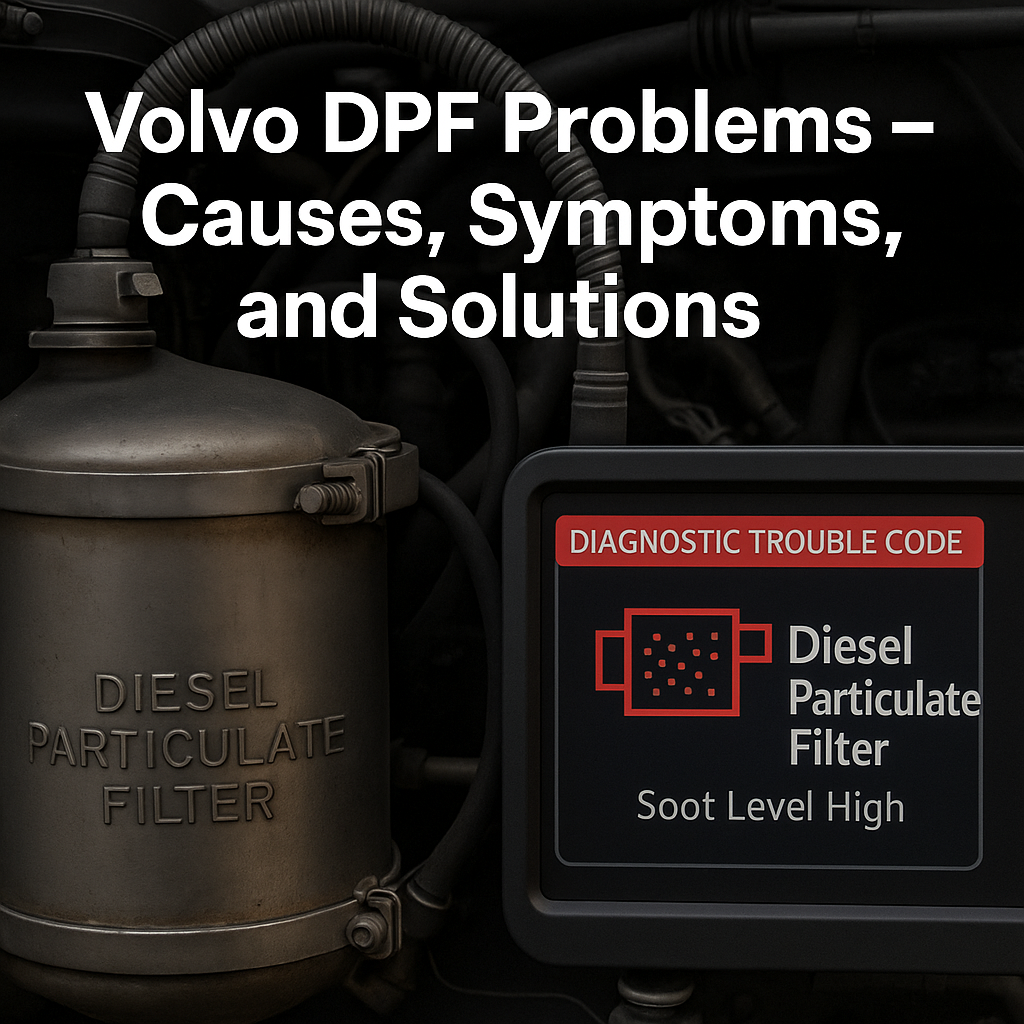
Volvo DPF Problems – Causes, Symptoms, and Solutions
Introduction – Why Volvo DPF Health Matters
The diesel particulate filter (DPF) is a crucial emissions-control component in modern Volvo trucks. Designed to trap and remove soot particles from exhaust gases, the DPF helps your truck meet strict EPA emissions standards. But when problems arise, they can cause performance loss, increased fuel consumption, and even engine derates.
In Volvo models like the D12, D13, and D16, DPF issues are one of the most common reasons for unplanned downtime. Understanding Volvo DPF problems, their symptoms, and how to fix them is essential for keeping your truck compliant and on the road.
Understanding the Volvo DPF System
The Volvo DPF works in combination with other aftertreatment components, including:
-
DOC (Diesel Oxidation Catalyst) – Pre-treats exhaust gases before they enter the DPF.
-
DPF Filter Element – Traps soot and ash particles.
-
Sensors (Temperature, Pressure, NOx) – Monitor system health.
-
DEF (Diesel Exhaust Fluid) & SCR System – Reduces nitrogen oxide emissions.
-
Regeneration Process – Burns off accumulated soot either passively (during driving) or actively (by injecting fuel to raise exhaust temperature).
When the system works properly, it keeps exhaust clean and your Volvo truck compliant. But DPF failures can bring operations to a halt.
Common Causes of Volvo DPF Problems
-
Incomplete Regeneration Cycles – Short trips or frequent idling prevent proper soot burn-off.
-
Excessive Soot Production – From injector problems, turbo failure, or EGR issues.
-
Sensor Failures – Faulty temperature or pressure sensors feed incorrect data to the ECM.
-
Poor Fuel Quality – Increases soot load and clogs the DPF faster.
-
Oil Contamination – From worn piston rings, valve seals, or turbo seals.
-
Faulty EGR System – Increases soot levels, overloading the DPF.
-
DEF System Malfunctions – Lead to incorrect emissions reduction and trigger fault codes.
Symptoms of Volvo DPF Problems
-
Check Engine or Aftertreatment Warning Lights
-
Loss of Power & Derate Mode
-
Frequent Active Regenerations
-
Poor Fuel Economy
-
High Exhaust Backpressure
-
Excessive Smoke from Exhaust
-
Strong Diesel Smell from Exhaust
Troubleshooting Table – Volvo DPF Problems
| Symptom | Likely Cause | Recommended Fix |
|---|---|---|
| Frequent regens | Short trips or idling | Drive at highway speeds to complete regen |
| Loss of power | Clogged DPF | Perform forced regen or clean/replace DPF |
| Check engine light + SCR code | DEF system fault | Diagnose and repair DEF dosing |
| High exhaust temp | Sensor fault | Replace faulty temperature/pressure sensor |
| Soot level warning | EGR malfunction | Inspect and repair EGR valve or cooler |
Diagnosing Volvo DPF Issues – Step-by-Step
-
Read Fault Codes – Use Volvo’s Premium Tech Tool (PTT) or JPRO.
-
Check Soot Load Data – Measured in grams or percentage.
-
Inspect Sensors – Look for damage, corrosion, or incorrect readings.
-
Verify Regeneration History – Check for incomplete regens.
-
Examine DEF Quality – Contaminated DEF can cause system faults.
-
Inspect EGR Operation – Ensure proper function to prevent soot overload.
Fixing Volvo DPF Problems
-
Forced Regeneration – Clears soot load through a stationary regen process.
-
DPF Cleaning – Bake and blast cleaning restores filter efficiency.
-
DPF Replacement – Required if filter substrate is damaged or melted.
-
Sensor Replacement – Restores accurate system monitoring.
-
Address Root Causes – Fix injector, turbo, or EGR issues to prevent recurrence.
Preventing Volvo DPF Problems
-
Avoid excessive idling.
-
Use ULSD (Ultra-Low Sulfur Diesel) and high-quality DEF.
-
Follow OEM maintenance schedules for filters and oil changes.
-
Perform regular inspections of EGR and turbo systems.
-
Allow regen cycles to complete before shutting down the engine.
Real-World Example – Volvo D13 DPF Failure
A fleet operating Volvo D13 trucks experienced multiple DPF clogging incidents every 50,000 miles. Investigation revealed a leaking EGR cooler causing excess soot. After replacing the EGR cooler and cleaning the DPF, regen intervals returned to normal, saving the fleet thousands in repair costs.
FAQs
What causes Volvo DPF problems?
Incomplete regens, sensor faults, EGR issues, and poor fuel quality.
Can you drive with a bad Volvo DPF?
Not recommended; it can cause derate and engine damage.
How do I fix a clogged Volvo DPF?
Perform forced regen, clean, or replace the filter.
How much does Volvo DPF replacement cost?
$2,000–$6,000 depending on the model.
How often should I clean my Volvo DPF?
Typically every 200,000–250,000 miles or as needed.
Can bad injectors cause DPF failure?
Yes, they increase soot production.
What is the difference between active and passive regen?
Active regen uses extra fuel to raise exhaust temp, passive occurs during normal driving.
Does turbo failure affect the DPF?
Yes, oil contamination can clog the filter.
What is the lifespan of a Volvo DPF?
Around 400,000–500,000 miles with proper care.
Can aftermarket DPF filters be used in Volvo trucks?
Yes, but OEM or high-quality aftermarket options are recommended.
Internal Links
Conclusion – Keeping Your Volvo DPF in Top Condition
Volvo DPF problems can quickly escalate if ignored, leading to costly repairs and extended downtime. Regular maintenance, high-quality fuel and DEF, and proper driving habits are key to extending DPF life. By understanding the causes and solutions, you can keep your truck compliant and performing at its best.
Contact Information
📧 Email: info@volvokits.com
📞 Phone: 786-814-1410
🌐 Website: https://www.volvokits.com
