
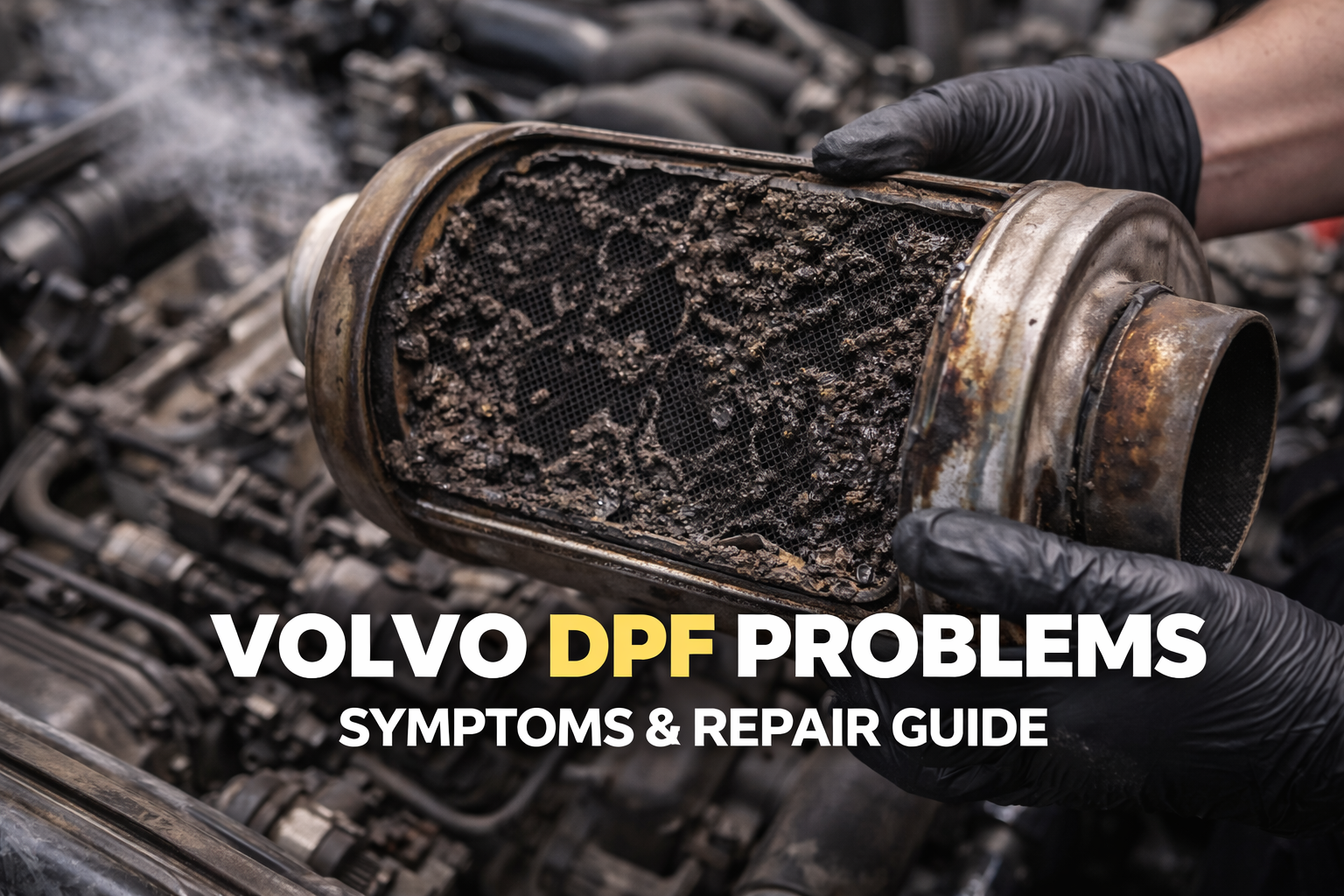
8 Volvo DPF Problems – Symptoms, Causes, and Repair Guide
Introduction—Why the DPF Is Critical in Volvo Diesel Engines
The Diesel Particulate Filter (DPF) is one of the most important emissions components in modern Volvo diesel engines, such as the Volvo D13 and D16. The DPF captures soot particles from exhaust gases and burns them off during regeneration cycles to reduce emissions.
When Volvo DPF problems occur, engine performance drops, fuel consumption increases, and the truck may enter derate mode. Ignoring DPF issues can lead to turbocharger damage, EGR failure, overheating, and expensive engine repairs.
This complete guide explains Volvo DPF problems, including warning signs, root causes, diagnostics, repair costs, and prevention strategies.
What Does the Volvo DPF Do?
The Volvo DPF:
-
Captures soot particles from exhaust
-
Burns soot during regeneration
-
Reduces particulate emissions
-
Protects environment and emissions compliance
Without proper DPF function, soot accumulates and restricts exhaust flow.
8 Common Volvo DPF Problems
1. Frequent Regeneration Cycles
One of the first signs of Volvo DPF problems is excessive regeneration.
Causes:
-
Faulty EGR system
-
Boost leaks
-
Short trip operation
2. DPF Clogging
Soot accumulation blocks exhaust flow.
Symptoms:
-
Reduced power
-
High exhaust backpressure
-
Check engine light
3. Failed DPF Pressure Sensors
Incorrect sensor readings trigger false DPF warnings.
4. Ash Accumulation
Over time, ash builds up and cannot be burned off.
5. DPF Cracking
Thermal stress causes internal cracking.
6. Turbocharger Issues Causing Excess Soot
Boost leaks increase soot production and accelerate DPF clogging.
7. EGR System Malfunctions
EGR cooler or valve issues increase particulate levels.
8. Complete DPF Failure
Severe restriction causes:
-
Engine derate
-
Overheating
-
Turbo stress
Symptoms of Volvo DPF Problems
Common symptoms include:
-
DPF warning light
-
Engine derate mode
-
Poor fuel economy
-
Frequent regens
-
Black smoke
-
Loss of power
-
High exhaust temperature
How to Diagnose Volvo DPF Problems
1. Monitor Regeneration Frequency
Frequent regens indicate soot imbalance.
2. Check Exhaust Backpressure
High readings suggest blockage.
3. Inspect EGR System
EGR failures increase soot production.
4. Scan for Fault Codes
Use the diagnostic tool to identify sensor issues.
How DPF Problems Cause Engine Damage
Ignoring Volvo DPF problems can lead to:
-
Turbocharger overheating
-
EGR cooler failure
-
Increased fuel consumption
-
Complete emissions system failure
Volvo DPF Replacement Cost
| Item | Estimated Cost |
|---|---|
| DPF Unit | $2,500–$5,000 |
| Labor | $800–$1,500 |
| Cleaning Service | $400–$800 |
| Total Replacement | $3,500–$6,500 |
Cleaning is cheaper but not always effective if internal damage exists.
DPF Cleaning vs Replacement
Cleaning Recommended When:
-
Ash accumulation only
-
No core cracking
Replacement Required When:
-
Internal cracking
-
Melted substrate
-
Severe restriction
Preventing Volvo DPF Problems
-
Maintain EGR system
-
Fix boost leaks
-
Use high-quality fuel
-
Avoid short idle cycles
-
Perform regular highway driving
Preventive maintenance reduces DPF-related downtime.
Real-World Example—Volvo D13 DPF Failure
A Volvo D13 experienced repeated derate conditions.
Diagnosis:
-
DPF heavily clogged due to turbo boost leak.
After repair:
-
Turbo fixed
-
DPF cleaned
-
Regeneration normalized
Frequently Asked Questions
What are the symptoms of Volvo DPF problems?
Can a clogged DPF cause engine derate?
How long does a Volvo DPF last?
How much does Volvo DPF replacement cost?
Can turbo problems cause DPF failure?
Why Volvo DPF Problems Are Increasing in Modern Diesel Trucks
Modern Volvo diesel engines are designed to meet strict emissions regulations, which means the DPF works harder than ever. As emission standards tighten, soot control becomes more aggressive, leading to higher DPF stress.
Several factors contribute to increasing Volvo DPF problems:
-
Short-distance driving that prevents full regeneration
-
Excessive idling
-
Faulty EGR systems
-
Turbocharger boost leaks
-
Poor-quality fuel
-
Delayed maintenance
When the DPF cannot complete proper regeneration cycles, soot accumulates rapidly. Over time, this buildup increases exhaust backpressure, which forces the engine to work harder.
Higher backpressure affects:
-
Turbocharger performance
-
Fuel economy
-
Exhaust temperature balance
-
Engine efficiency
Ignoring early warning signs such as frequent regeneration or derate mode often leads to complete DPF blockage.
In many cases, Volvo DPF problems start as minor regeneration irregularities and gradually escalate into severe restrictions.
Routine monitoring of:
-
Regeneration frequency
-
Exhaust temperature readings
-
Backpressure data
can prevent costly replacement.
How Volvo DPF Problems Affect Fuel Economy
When a DPF becomes partially clogged, the engine must push exhaust gases through a restricted system. This increases fuel consumption because:
-
The turbo works harder
-
More fuel is injected during active regeneration
-
Engine efficiency drops
Fleet operators often notice rising fuel costs before a DPF warning light appears.
Addressing Volvo DPF problems early improves:
-
Engine longevity
-
Turbocharger life
-
Emissions compliance
-
Overall operating costs
