
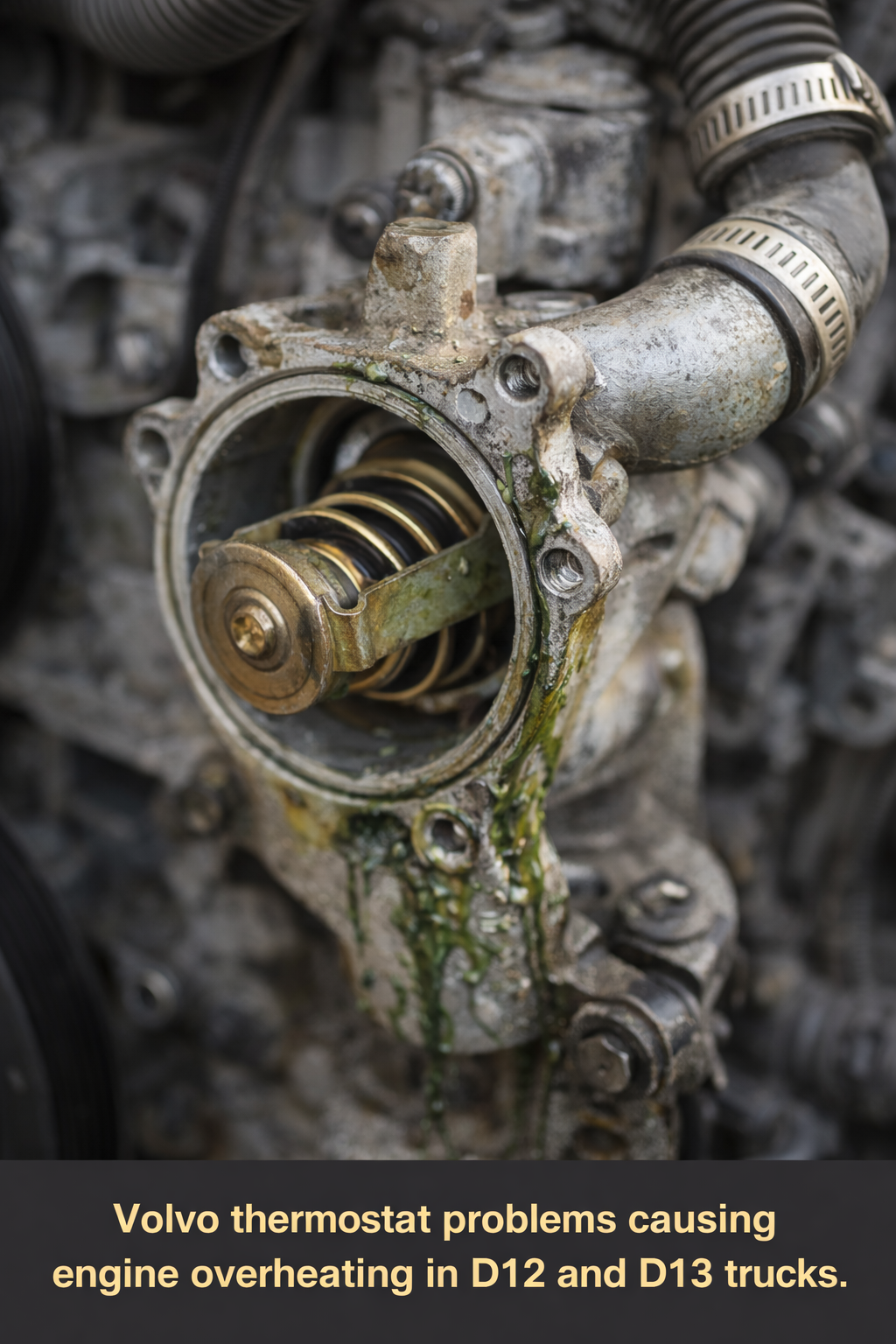
Volvo Thermostat Problems 12 – Symptoms, Causes, and Replacement Guide
Introduction—Why the Thermostat Is Critical in Volvo Engines
The thermostat is a small but essential component in every Volvo heavy-duty diesel engine. In engines such as the D12, D13, and D16, the thermostat controls coolant flow between the engine and radiator, ensuring the engine reaches and maintains its optimal operating temperature.
When Volvo thermostat problems occur, engine temperatures become unstable. A thermostat stuck open can cause poor fuel economy and excessive engine wear, while a thermostat stuck closed can lead to rapid overheating, head gasket failure, and catastrophic engine damage.
This guide explains Volvo thermostat problems in detail, including symptoms, causes, diagnostics, replacement procedures, costs, and preventive maintenance strategies to protect your engine and avoid downtime.
Table of Contents
-
What Does a Volvo Thermostat Do?
-
Common Causes of Volvo Thermostat Problems
-
Symptoms of Volvo Thermostat Failure
-
Troubleshooting Table – Volvo Thermostat Problems
-
Diagnosing Volvo Thermostat Issues (Step-by-Step)
-
How Thermostat Failure Leads to Bigger Volvo Engine Problems
-
Volvo Thermostat Replacement Guide
-
Preventing Volvo Thermostat Problems
-
Real-World Case Study – Volvo D13
-
Conclusion
What Does a Volvo Thermostat Do?
The thermostat regulates coolant flow based on engine temperature:
-
Cold engine: Thermostat remains closed, allowing the engine to warm up quickly
-
Normal operating temperature: Thermostat opens gradually, circulating coolant through the radiator
-
Heavy load or high heat: Thermostat fully opens to prevent overheating
Proper thermostat operation is critical for:
-
Stable engine temperature
-
Efficient combustion
-
Fuel economy
-
Emissions control
-
Balanced cooling system operation (water pump, radiator, oil cooler, EGR cooler)
Common Causes of Volvo Thermostat Problems
1. Thermostat Stuck Closed
-
Coolant cannot circulate to the radiator
-
Causes rapid overheating
-
Often leads to head gasket and EGR cooler damage
2. Thermostat Stuck Open
-
The engine never reaches operating temperature
-
Causes poor fuel economy and increased engine wear
-
Can trigger frequent DPF regenerations
3. Coolant Contamination
-
Rust, sludge, or incorrect coolant restricts valve movement
-
Significantly shortens thermostat lifespan
4. Heat Cycling and Age
-
Thermostats weaken after repeated heat cycles
-
Most failures occur between 300,000 and 500,000 miles
5. Overheating History
-
Past overheating permanently damages the thermostat’s wax element
Symptoms of Volvo Thermostat Failure
Thermostat Stuck Closed Symptoms
-
Rapid overheating
-
Cool upper radiator hose
-
Coolant boiling or pushing from reservoir
-
The heater blows cold air
-
Check engine light for coolant temperature
Thermostat Stuck Open Symptoms
-
Engine runs cold
-
Poor fuel economy
-
Long warm-up time
-
Excessive white smoke during cold starts
-
Increased soot and DPF regenerations
Troubleshooting Table – Volvo Thermostat Problems
| Symptom | Likely Cause | Recommended Fix |
|---|---|---|
| Overheating within minutes | Thermostat stuck closed | Replace thermostat |
| The engine never warms up | Thermostat stuck open | Replace thermostat |
| Heater not working | Coolant flow blocked | Replace thermostat |
| Cool upper radiator hose | Closed thermostat | Replace thermostat |
| Poor MPG & cold engine | Open thermostat | Replace thermostat |
Diagnosing Volvo Thermostat Issues—Step-by-Step
1. Monitor Engine Temperature
-
Use dashboard gauge or diagnostic scanner
-
Normal temperature should stabilize consistently
2. Hose Temperature Test
-
The upper radiator hose should warm gradually
-
A cold hose during overheating indicates a stuck thermostat
3. Infrared Thermometer Test
-
Compare thermostat housing vs. radiator inlet temperature
4. Cooling System Pressure Test
-
Rule out leaks before replacing the thermostat.
5. Remove and Bench Test
-
Place thermostat in heated water
-
Verify opening temperature and valve movement
How Thermostat Failure Leads to Bigger Volvo Engine Problems
A failed thermostat can trigger a chain reaction:
-
Overheating → Head gasket failure
-
Coolant restriction → Oil cooler damage
-
Poor temperature control → EGR cooler cracking
-
Cold engine operation → DPF clogging
-
Unstable temperatures → Turbocharger stress
This is why thermostat issues should never be ignored in Volvo engines.
Volvo Thermostat Replacement — What You Need to Know
Is Thermostat Replacement Difficult?
Moderate difficulty, but must be done correctly.
Best Practices
-
Always use OEM or OEM-equivalent thermostat
-
Replace gasket/seal every time
-
Flush coolant if contamination is present
-
Bleed air from cooling system properly
Volvo Thermostat Replacement Cost
-
Thermostat: $60–$150
-
Labor: $300–$
-
Total average cost: $400–$1,000
Early replacement is one of the cheapest ways to prevent major engine damage.
Preventing Volvo Thermostat Problems
-
Use Volvo-approved coolant only
-
Flush coolant at OEM intervals (typically every 2 years)
-
Replace thermostat during water pump service
-
Avoid engine overheating at all costs
-
Inspect thermostat whenever cooling issues arise
Real-World Case Study – Volvo D13 Thermostat Failure
A Volvo VNL equipped with a D13 engine experienced repeated overheating during highway pulls.
Diagnosis
-
The upper radiator hose remained cold
-
Thermostat stuck closed
Repair
-
Thermostat replacement
-
Coolant flush
-
Proper air bleeding
Result
-
Engine temperature stabilized
-
Overheating eliminated
-
Head gasket failure avoided
FAQs
Internal Links
(Only to previously generated content, per your instruction)
-
Volvo Engine Overheating—Causes, Diagnosis, and Fixes
-
Volvo Water Pump Problems—Symptoms and Replacement
-
Volvo Head Gasket Failure—Symptoms and Repair
-
Volvo Oil Cooler Problems—Causes and Solutions
-
Volvo D12 vs. D13—Engine Comparison
Conclusion—Why Volvo Thermostat Maintenance Matters
Volvo thermostat problems may seem minor, but they are often the starting point for major engine failures. Whether stuck open or closed, a failing thermostat disrupts coolant flow, damages related components, and shortens engine life.
By replacing thermostats proactively, maintaining clean coolant, and monitoring engine temperature closely, fleets and owner-operators can protect their Volvo engines and avoid thousands of dollars in repairs.
